Group Picture of the Law Offices of Jeffrey S. Glassman
Justia Lawyer Rating

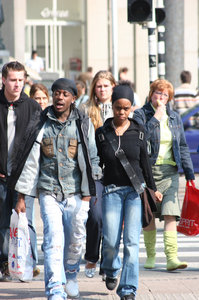
Local officials are looking to better pedestrian safety at the Bianculli Boulevard/Morrissey Boulevard intersection. This recent safety effort comes after a local resident, Savin Hill, posted a video about the ongoing dangers that pedestrians face at this intersection.

Passing traffic is not only threatening to pedestrians, but it’s threatening to all travelers of the area.
mqyt6Re.jpg
According to the Boston Globe, reps from the Department of Conservation and Recreation, elected area officials and state police visited the area, which is a gateway onto the University of Massachusetts Boston campus. This area was recent dubbed a “human frogger” game by one local blogger.

Our Boston personal injury lawyers understand that there were close to 250 pedestrians in the state of Massachusetts who sustained severe or incapacitating injuries in motor vehicle crashes in 2008. It’s important that our city is equipped with the devices that are needed to help to keep our walkers safe, especially because pedestrian traffic is so prominent in the area. According to the Boston Public Health Commission, about 10 percent of pedestrians actually wait for the “Walk” signal before crossing the street. About a third of all pedestrians jaywalk. What’s even worse is that only about 95 percent of drivers yield to pedestrians. Many of these dangers can be reduced, if not eliminated, if our roadways were more equipped for this kind of traffic.

At a recent meeting regarding the dangerous intersection at Morrissey Boulvard and Bianculli Boulevard was the City Councilor Frank Baker, state Senator Jack Hart and state Representative Marty Walsh. And they promised action.

Officials with the Department of Conservation and Recreation say that they’re going to be making some short-term improvements to the area and to the pedestrian traffic signals at that intersection to help to make sure that vehicular traffic will stop when pedestrians need to cross.

Hart says the he hopes that the action of local officials will help to alleviate the concerns regarding pedestrian safety in the area. Officials are also hoping to create and implement a long-term solution in the area soon. A completely new design for the intersection may be soon in the works.

Officials have already scheduled a follow-up meeting with officials of UMass Boston, the Department of Conservation and Recreation and Massachusetts State Police.

According to the official census, about 600,000 people call the City of Boston home. When you add the workers and the visitors who come to the city each and every day, there is an estimated 2 million pedestrians. This is another reason why pedestrian safety is, and should be, an issue of critical importance. Drivers are asked to be cautious throughout the entire area to help to protect our most vulnerable travelers.
Continue reading
There was a six-car pileup on the Massachusetts Turnpike that ended up backing up traffic for miles. It all happened in Warren during the height of rush hour near mile marker 67 and Exit 8, accident to the Boston Globe.

Massachusetts State Police (MSP) reports that the part of the road in which the accident happened had two traveling lanes, but officers were forced to close the left-hand lane because of the accident. Injuries were reported.
122642_fast_car.jpg
Our Boston car accident attorneys understand the risks that accompany our state’s narrow and congested roadways. The Turnpike is one of the worst in many areas. At all hours of the day, Massachusetts drivers and visitors fly down the narrow lanes of this road. The truth is in the numbers. According to the National Highway Traffic Safety Administration (NHTSA), there were more than 310 people who were killed in car accidents in our state in 2010. Only 20 of these accidents happened in rural areas. The rest occurred in urban areas where some of our state’s busiest roadways can be found.

Of the people who were killed in these accidents, there were close to 100 passengers who were not wearing a seat belt when their accident happened. Motorcyclists were not much better. There were about 10 of the approximate 55 motorcyclists who were killed in traffic accidents in 2010 who were not wearing a helmet at the time of the accident.

All in all, there were more than 400 drivers involved in the state’s fatal accidents over the year. More than 50 of them were between the ages of 15 and 20. There were another 50 who were under the age of 21 and about 350 who were 21-years-old and older.

There are a few simply safety tips that you can take to help to ensure your safe arrival. It’s most important that you keep your full attention on the road. Driving is a complex task and requires your full concentration and awareness.

Turnpike Safety Tips:

-Always abide by all road signs, including speed limit postings and lane changes.

-Make sure that you adjust your driving to the current conditions, including weather conditions and traffic conditions.

-Keep distractions out of the driver’s seat. Your full attention needs to be on your surroundings.

-Always use a turn signal, whenever you are changing lanes or entering/exiting the turnpike.

-Know where you’re going before you get on the turnpike. Know how far you have to travel and what your exit number is.

-Never drunk or consume any drugs before driving. You should never drive under the influence.

-Make sure that everyone in your vehicle, including yourself, is buckled in during each and every car ride.

-Never travel in another vehicle’s blind spots. Make yourself as visible along these roadways as possible.

-Always drive with your headlights on.

-Keep your distance between you and other vehicle. Never follow too closely and don’t cut in front of other cars.
Continue reading

A woman has been charged with speeding her car right through a road cleanup crew. In the accident, one worker was killed and another was injured badly enough that he had to have his leg amputated. According to the Boston Globe, the woman is now on trial. She’s being charged with motor vehicle homicide by negligent operation.
717567_driving.jpg
According to prosecutors, the 36-year-old driver was experiencing a seizure while driving along Route 3 in Chelmsford back in December of 2009. Allegedly, she drove right through a blocked-off breakdown lane where a cleanup crew was taking care of a spill of diesel fuel from earlier in the day. One of the workers was hit and another was pinned to another vehicle and ended up dying. Prosecutors are saying that she was driving even though she was aware of her medical conditions and was aware that it led to seizures.

Our Boston car accident lawyers understand that, for most people, driving represents a sense of freedom, competence and control. Driving helps us to get from where we are to places we need to be. It’s a complex skill that some don’t have the ability to perform safely. Those who have had one or multiple seizures may no longer be able to drive safely.

What happens when you have a seizure is you lose all control of your body. The way you act changes. The way you sense things changes. Some even pass out immediately. If a driver has a seizure behind the wheel, they can easily lose control of the vehicle and crash, causing serious injury to themselves or to other innocent motorists. Still, drivers continue to get behind the wheel, disregarding state laws and disregarding road safety.

A lot of people who have had seizures in the past are able to get back behind the wheel once their condition is under control. Others might not be so lucky. It all depends on a few factors:

-The cause of the seizure.

-The kind of seizure a person usually has.

-The related laws in the state in which the driver is licensed.

-How long the seizures have been going on and how they affect your awareness.

Have you had a seizure? You’ll want to talk to your doctor right away! Talk with your healthcare provider about specific medicines that can help to prevent these episodes and ask about how these medicines could possibly affect your driving abilities. It’s important that you take the responsibility for your condition and make the right decisions, whether that includes driving or hanging up the keys.

In the state of Massachusetts, laws says that “an individual with epilepsy will be considered eligible for a driver’s license if he or she has been seizure free for 6 months and submits a detailed physician’s report and recommendation that he or she is able to drive safely,” according to the Epilepsy Foundation.
Continue reading

According to a report from the National Highway Traffic Safety Administration (NHTSA), post-mortem testing results showed an increase in the level of drug involvement in drivers who were killed in car accidents from 2005 to 2009.

The study concluded that close to 65 percent of the 21,800 drivers who were killed in 2009 were tested for drugs. Of these drivers, there were close to 4,000 who returned positive test results. These drivers accounted for close to 20 percent of those involved in fatal accidents for the year.
mgyptbs.jpg
In the inforimation that was collected there were three categories: whether or not the driver was tested, the test results and how the test was administered. Within the drug categories were inhalants, anabolic steroids, phencyclidines (PCPs), cannabinoids, hallucinogens, stimulants, depressants and narcotics. Drugs involved included over-the-counter medicines, legally prescribed drugs and illicit drugs.

Our Boston car accident lawyers would like to remind every driver that they have a personal and moral responsibility to drive responsibly and to do so with uncompromised faculties. The report released by the NHTSA illustrates just how many drivers in the country are driving after consuming drugs. Most drivers don’t even recognize the dangers and the risks.

In announcing the findings, NHTSA Administrator David Strickland issued a caution to dangerous drivers; this is a more serious problem than we could ever have imagined. Drug tests are not always administered and even when they are, results are not always reported,
meaning that these numbers might actually be much higher. More states are catching up and more drug tests should be expected to be administered across the country in coming years.

“If you are taking any drugs that might impair your ability to drive safely, then you need to put common sense and caution to the forefront, and give your keys to someone else,” said Strickland.

Strickland says that officials with the NHTSA will be conducting even more research to get a better understanding of the correlation between drugs, the level of intoxication and both of their impacts on accidents.

The NHTSA is currently pushing the Drug Evaluation and Classification program to help educate 1,000 instructors and over 6,000 law enforcement officials throughout more than 45 states to help to recognize the various symptoms of drug impairment among drivers.

Of the more than 210 accidents in which a driver was killed in the state of Massachusetts in 2009, there were close to 15 drivers who were never tested, close to 70 who returned negative test results, 20 who were found with drugs, more than 15 in which the test results were unknown. Another 95 had unknown testing status.

More and more states are slowly creating ways to try to keep these drivers under control. Sometimes these strategies work and sometimes they don’t. We’re calling on all drivers to do the right thing and to stay from behind the wheel whenever under the influence of any kind of alcohol or drugs.
Continue reading

The number of people killed in car accidents during the first 7 months of 2012 is up close to 10 percent compared to the same time period in 2011.

According to the National Safety Council (NSC), there were close to 21,000 people who were killed in car accidents through July. This figure is up from 7-10 percent over recent years. The number of fatalities through July of 2011 were less than 20,000, which was a 1 percent decrease from 2010.
dJlotj.jpg
Our Boston car accident lawyers understand that state safety officials nationwide are pushing distracted-driving laws and other safety measures meant to reduce dangers on the road.

Clearly, that doesn’t seem to be working. Drivers aren’t listening and they’re losing their lives because of it. Many states, including Massachusetts, have banned all drivers from using a cell phone behind the wheel. We’ve even gone as far as prohibiting young drivers from text messaging while driving. Still, many of these states are seeing a significant number of distracted driving accident fatalities, with little to no decreases in the incidents since the passage of these laws.

Currently, the population death rate sits at just under 12 fatalities per 100,000 residents. This is an increase of 5 percent from the previous year. The mileage per death rate is also up close to 10 percent, at nearly 1.5 deaths per 100 million vehicle miles traveled.

Fatalities aren’t the only bad news on the rise. Accident injuries have skyrocketed, too! During the first seven months of 2012, there were more than 2 million people injured in crashes. That more than a 10 percent increase from this time last year.

If accidents, injuries and fatalities from car accidents are up from last year’s numbers then you better believe that the costs of these accidents are up, too! During the first seven months of 2012, officials estimate that these accidents cost more than $150 billion — up 20 percent from last year. Included in these costs are property damage, employer costs, administrative expenses, medical expenses and wage and productivity losses.

Officials with the Massachusetts Department of Transportation (MassDOT) offer drivers safe driving tips to help to reduce the risks of car accidents throughout the state. It’s important that you know what’s going on around you at all times, including your speed, as well as traffic and weather conditions.

Safe Driving Tips:

-Always make sure that you and all of your passengers are properly buckled in.

-Be aware of the traffic around you.

-Make sure that you always use your turn signal.

-Park so that you won’t have to back out, but when you have to you should turn around and physically check blind spots.

-Keep cell phones and text messaging devices out of the driver’s seat.

-Always practice defensive driving habits.

-Don’t eat or drink while driving.

-Always followed posted street signs.

-Adjust driving to accommodate current weather conditions.
Continue reading

Teens in the state of Massachusetts have a list of rules to follow through the state’s Graduated Driver’s Licensing (GDL) program.

According to the Insurance Institute for Highway Safety (IIHS), they’ve got supervised driving time, nighttime driving restrictions and passenger restrictions to follow. During this time, they’re learning the driving skills that they’re going to hang on to for the rest of their lives. It’s important that we steer them in the right direction. Unfortunately, that’s not always done effectively.
wheel.jpg
We’re talking to you parents! The truth of the matter is that parents and guardians play the most important role when it comes to helping to teach these young drivers. You may not think so, but it’s true. Unfortunately, many parents aren’t setting a good example. According to Claims Journal, about two-thirds of surveyed teens believe that their parents follow a whole different set of driving rules. The recent study was conducted by Liberty Mutual Insurance as well as by officials with Students Against Destructive Driving (SADD).

What it comes down to is this: There’s an alarming percentage of teenage drivers who report that their parents make poor and risky decisions while driving.

Our Boston car accident attorneys are asking parents and guardians to step up to the plate. The first year that a driver has their license is the most vulnerable. The driving habits that they witness are likely to be ones that they’re going to mimic and the ones that they’re going to hold onto for a lifetime.

The recent study looked at the feedback of more than 1,500 teen drivers and really got their perspective on their parents’ driving habits. An alarming number of teens report that their parents oftentimes sped, drove while distracted, drove under the influence of alcohol and marijuana and even neglected to wear their seat belts.

The study also looked at the likelihood of teens to mimic these behaviors. It concluded that teens engaged in as many of these dangerous driving behaviors as their parents did. It’s all a part of the “do as I say, not as I do” mindset, where parents think that they can make the rules, but it’s not their responsibility to follow them.

“Parents have to demonstrate good driving behavior from the onset so new drivers understand that safe driving rules apply to everyone equally,” said Stephen Wallace, senior adviser with SADD.

We all have to remember that car accidents continue to be the number one cause of death for teens across the country.

We’re suggesting that parents create and enforce a parent-teen driving contract to help to make some rules and to enforce them within the household. This will help to ensure that everyone is on the same page when it comes to safe driving habits.
Continue reading

In a recent traffic accident, a dump truck let out about 100 gallons of fuel onto Ash Street. According to the Metro West Daily News, the Massachusetts Department of Environmental Protection (MassDEP) is still waiting to do an investigation into the accident scene to see just how much damage was done.
21066_gasoline_tanker.jpg
“Once we get in there, we’ll have a better sense of what the situation is,” said MassDEP Spokesman Ed Coletta.

Our Boston accident lawyers understand that this accident could have been prevented with a little more caution. It all happened when the driver of the dump truck crossed over into the left lane and slammed right into a wooded area just before 11:300 a.m. According to Ken Clark, the Hopkinton Fire Chief, the truck slammed into a number of trees. One of those trees caused some serious damage to the 132-gallon diesel fuel tank. Fuel wound up spilling everywhere.

The driver of the truck was transported to Milford Regional Medical Center where he was treated for non-life-threatening injuries.

Firefighters who responded to the accident tried to catch the fuel using an inflatable pool-like collection device. Luckily, the accident didn’t happen near any sensitive environment areas, but officials want to make sure that none of the fuel is going to affect any of the well systems nearby.

The truth of the matter is that there’s no getting around large trucks. They carry critical commodities, including fuel. Unfortunately, these trucks also work to deliver some serious accident risks. Most times, other travelers, such as those in passenger vehicles, those on bicycles and those on foot, don’t stand a chance against these large vehicles. That’s why you have to be extra cautious when driving around these vehicles.

According to the National Highway Traffic Safety Administration (NHTSA), there were close to 4,000 people who were killed in the U.S. in traffic accidents involving large trucks in 2010, There were also another 80,000 people who were injured in these kinds of accidents. And it doesn’t look like it’s getting better any time soon. From 2009 to 2010, there was an increase in the number of these fatal accidents by close to10 percent.

More than 75 percent of the people who were killed in these accidents were in fact the occupants of the other vehicles that were involved.

In the state of Massachusetts, there were close to 100 large trucks involved in fatal accidents in 2010. Many of these trucking accidents could have been avoided with safer driving habits. Our trucking accident lawyers are reminding you that these trucks don’t operate like the vehicles that you and I drive. We have to allow them more space and much more consideration. Our safety often depends upon it.
Continue reading

Following along with traffic seems to be a little difficult for some. There was another wrong-way car accident on the Massachusetts Turnpike that wound up killing two innocent motorists, according to the Boston Globe.
75579_drunk_driving.jpg
Massachusetts State Police (MSP) report a 35-year-old driver was spotted driving east down the westbound lanes of the busy roadway. The accident happened in Palmer just before 4:00 p.m. One of the witnesses called police and said that a driver, who was initially traveling in the right direction, made a U-turn and started heading down the wrong way on the Turnpike. The driver has been arrested and is now being charged with operating under the influence of alcohol.

Our Boston car accident lawyers understand that there was an 84-year-old man who was busted for driving the wrong way down the same road just a week ago. In this incident, the wrong-way driver and the driver of a vehicle he hit were killed. We hear about these accidents all too often. It seems like it’s every driver for themselves out there!

For the most part, the Massachusetts Turnpike is a relatively safe road, until there are driver on it. Still, there are a number of deficiencies on this road. One of the most obvious of these deficiencies is the placement of the EZ-Pass/Fast Lane and the tolls. Along the Boston Extension, many say that the lack of safe shoulders is a big problem! Others note the median guardrails are getting too old and we need to move to more concrete barriers (or Jersey barriers) to help to increase safety.

The congestion on this roadway can definitely cause problems, too. This is especially true when traveling during rush hour, the weekend and during season. Some of this congestion could easily be eliminated with the extension of exit-only lanes, officials say.

With a few minor changes, we may have fewer accidents on this road, like the 4-vehicle accident that happened recently in Warren at mile marker 72.5. This was the accident that involved that big tractor-trailer. After the collision, all westbound lanes were shut down. It happened just after 10:00 p.m., according to Mass Live. There were emergency response teams, firefighters and police officers who responded to the accident.

Drivers are asked to be on their best behavior when traveling along our busy Massachusetts roadways. The fast-moving traffic increases risks for accidents. Keep an eye on the posted speed limits and adjust your driving to accommodate the current weather and traffic conditions. Stay alert and keep distractions out of the driver’s seat!

One of the most important things you can do is to make sure that everyone in your vehicle is buckled in at all times. Seat belts may be your best defense against injury and death in the event of an accident. We understand not all accidents are avoidable, but make sure that you’re protected at all times.
Continue reading

Officials with the Governors Highway Safety Administration (GHSA) are working to get distracted and drugged drivers off of our roadways.

They’re stepping up enforcement and awareness efforts to not only get motorists to be safer behind the wheel, but to get state lawmakers to do more to keep these dangerous drivers off of our roadways.
671413_handshake.jpg
During the recent GHSA Annual Meeting, officials decided that they were going to broaden their support for distracted driving legislation. Before, officials were only calling for a ban on text messaging for drivers. Now, they’re pushing for an overall ban on all electronic devices for drivers.

Our Boston car accident lawyers understand that only drivers under the age of 18-years-old are banned from using a hand-held cell phone behind the wheel. All drivers are banned from text messaging, according to the Insurance Institute for Highway Safety (IIHS). GHSA has a big problem with states that have laws like these. Without a total ban on cell phones, officers oftentimes have a tough time figuring out if a driver is dialing a phone number to call, which is legal, or composing a text message, which is illegal.

That’s another reason why officials with GHSA are pushing for an overall ban.

Still, there are thousands who are killed in distracted driving car accidents every year. Drivers polled say that they understand the dangers that are associated with distracted driving, but they continue to fail in making the changes in their driving habits to prevent these kinds of accidents.

Barbara Harsha, Director for GHSA, says that the passage of these kinds of laws will provide states a practical platform for discussing why any phone use while driving is dangerous.

Right now, there are 39 states and Washington D.C. that ban text messaging for drivers. There are only 10 states that ban the use of hand-held cell phones.

For the second year in a row, officials with GHSA are looking to strengthen drugged driving policies. Now, officials are supporting drugged driving per se laws. This law is also known as the zero tolerance law. Under this kind of law, a driver can be charged with drugged driving for just having drugs or alcohol in their system. Right now there are only 17 states that have this kind of law on the books.

In addition, GHSA officials are urging each state to create a tougher penalty for those who are busted behind the wheel while under the influence of multiple drugs.

Every year, about a third of fatal car accidents involve a drunk driver.

Officials would also like state law enforcement to focus on these enforcement efforts during the evening hours. According to the National Highway Traffic Safety Administration (NHTSA), nearly 20 percent of nighttime drivers who are tested for drugs return positive test results.
Continue reading

Officials are investigating an accident that has claimed the life of a 38-year-old man.

According to NECN, a young bicyclist was also seriously injured in the accident. She was taken to the hospital for treatment. The incident occurred about 2:00 p.m. on Temple Street in Whitman.

According to officers, the little girl and her mom’s boyfriend were trying to cross the street, but weren’t doing so in a crosswalk. The driver involved in the accident was driving a pickup truck. He said that he tried to stop and then tried to help the victims. The Whitman Fire chief also tried to help. The accident happened right outside of his house. The young bicyclist was transported to Massachusetts General Hospital. The truck involved in the accident had firefighter plates, but authorities don’t think he’s a firefighter.

They did however, confiscate his cell phone as a part of the investigation. It has not been determined whether he will face charges.
949267_pedestrian_crossing_sign.jpg
“We don’t know why they might have been in the street or any other contributing factors of the nature of the crash,” said Tim Hanlon, Deputy Chief.

Our Whitman pedestrian accident lawyers understand the risks that our residents face when walking neighborhoods. Even in residential areas, motorists show little concern for pedestrians. They forget that these individuals have rights on the road, too! Unfortunately, about 20 percent of all traffic accident fatalities in the state of Massachusetts in 2008 involved pedestrians. During that same year, there were nearly 250 pedestrians who were seriously injured in these kinds of accidents too, according to the Massachusetts Department of Public Safety.

The likelihood of hitting a child pedestrian is higher when the motorist is returning home from work. Most child pedestrian injuries occur between 3:00 and 5:00 p.m. For K-3 most injuries occur by running into the street mid-block, while older children are most often injured at intersections.

The truth of the matter is that many of these accidents happen outside of a crosswalk. Pedestrians are urged to not only cross at street corners, but also in crosswalks whenever possible.

Officials with WalkBoston are working diligently to help to make the area safer for all pedestrians and travelers. One of the keys to making this happen is to design streets so that they’re safer. Officials with the group work to help local officials design and construct communities so that they’re more walkable.

How WalkBoston Can Help Community Leaders:

-Advise on walking improvements for the community.

-Provide guidance, moral support, technical assistance.

-Conduct a number of presentations on pedestrians advocacy and design.

-Demonstrate how these techniques are working across Massachusetts and elsewhere.

One of the main points officials with WalkBoston push for pedestrian safety is to get transportation officials to slow down their speed limits. As the speed of a motor vehicle increases, so does the risk for serious injury and death for a pedestrian in the event of an accident.
Continue reading

Contact Information