 Boston Car Accident Lawyer Blog


Motor vehicle crashes involving pedestrians can be among the most serious car accidents. They are very traumatic for those involved.
According to a recent news article from the Boston Globe, a school bus hit a man and his dog around 7:30 in the morning at the intersection of Columbus Avenue and Dartmouth Street in Boston.
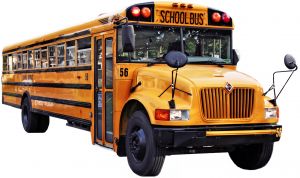 While no students are reported to have been injured in the bus crash, the dog was killed in the accident, and the man was taken to Tuffs Medical Center. Police have not released his name or his condition following the accident.
The driver stayed on the scene following the accident and called police and his supervisors, who responded to the Boston car accident. The bus was said to be part of a program to transport minority students from racially imbalanced schools in Boston to schools in surrounding neighborhoods.
Continue reading
 This means if there is an accident, and the at-fault driver has the minimum required insurance, the most the policy will pay any single victim for his or her injuries is $20,000. If there were two victims, the second victim could also be paid up to $20,000. If there are three victims, the third victim will not receive $20,000 because of the $40,000 per accident limit. There will probably be a third of $40,000 paid to each claimant assuming all had injuries of more than $20,000.
 Police say first responders had to cut the victim out the car and put in him in an ambulance so he could be transported to Boston Medical Center for immediate care in the emergency room. Boston emergency dispatchers were forced to detour the ambulance to another trauma center in Brockton.
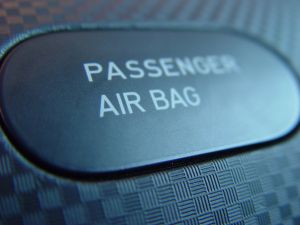 After being struck from behind, the force of the collision pushed their car into the intersection, where another vehicle struck them head-on. Husband was sitting in the front passenger seat. He was severely injured in the car crash and died from his injuries a few days later. During the crash, the front passenger airbag failed to deploy during both the rear and front-end impacts.
 Authorities say they are still investigating the cause of the fatal crash that killed the 17-year-old high school student. The accident occurred just before 3 a.m.
 The driver of the sedan slowed down as a school bus was passing the car when a large pickup truck, also driven by a teen, slammed into the rear of the sedan. Witness say EMS first responders quickly arrived on the scene and transported the young victim to UMass Memorial Medical Center, where he died from his injuries sustained in the car accident.
 A passenger in the sedan was badly injured and suffered serious cuts on his face. Firefighters had to use the Jaws of Life to cut one passenger from the wreckage, before the passenger was rushed to the hospital, along with one other victim.
 The serious car accident occurred shortly after noon on Massachusetts Avenue. The 50-year-old Boston resident was hit by the car and trapped beneath it for several minutes before being freed. It was an employee of a nearby gas station who got a car jack and raised the at-fault driver’s vehicle enough to get the victim out of harm’s way. Authorities are saying victim’s injuries were serious in nature, but not believed to be life threatening. He was transported to a local hospital with severe trauma to his legs.
 What is not in dispute is the auto accident resulted serious personal injury, and plaintiff was eventually required to have his left leg amputated. Plaintiff originally sued defendant for negligence in federal court. During jury selection, both parties had an opportunity for lengthy voir dire of prospective jurors.