Group Picture of the Law Offices of Jeffrey S. Glassman
Justia Lawyer Rating

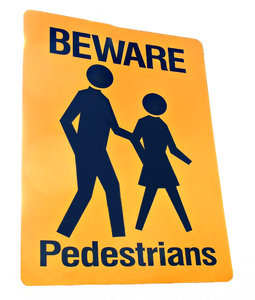
Pedestrian fatalities are a real risk throughout New England, but nowhere are walkers at greater risk than the City of Boston.

Traffic is getting crazy out there and drivers don’t care if you’re in another car, if you’re on a motorcycle or if you’re on your own two feet. Drivers aren’t paying attention to what’s going on around them or even to road laws. That’s one of the main reasons why the number of pedestrian fatalities has increased significantly in recent years, despite the overall decrease in the number of traffic fatalities.
mCoTPRc.jpg
There were nearly 33,000 people who were killed in traffic accidents in the U.S. in 2010, according to the most recent statistics from the National Highway Traffic Safety Administration (NHTSA). More than 4,250, or close to 15 percent, of these fatalities were of pedestrians. That means that a pedestrian was killed in a traffic accident every two hours and another one was injured every eight minutes.

Our Boston accident lawyers understand how popular walking is in the state of Massachusetts, especially within Boston. At least once a day, everyone is a pedestrian. We rely on buses, trains, cabs and subways to help us to our destinations, but ultimately we rely on our own two feet to get us to where we need to go.

In 2010, there were nearly 100 pedestrians killed in traffic accidents in Boston. Every year, there are more than 1,150 pedestrians taken to the hospital after an accident with a motor vehicle. While we may not have made it on the list of one of the most dangerous states in the nation, we definitely didn’t make it on the list as one of the safest.

About 90 percent of the pedestrian accidents recorded in 2010 happened when the weather was just fine, meaning there was no bad weather to blame. Some may have blamed the light, or lack thereof, as about two-thirds of pedestrian fatalities happened at night, according to The Washington Post.

Alcohol is nothing to brag about. In fact, intoxicated drivers were a factor in close to 15 percent of pedestrian fatalities and intoxicated pedestrians were involved in close to 35 percent of pedestrian deaths.

The Boston Public Health Commission (BPHC) is asking pedestrians to pay more attention to their surroundings when walking along our streets.

According to a recent study, little more than 10 percent of pedestrians wait for the “Walk” signal before they attempt to cross the street.

About a third of all observed pedestrians jaywalk, meaning they cross at least 5 feet from a crosswalk.

About 95 percent of drivers yield to pedestrians when pedestrians have the right of way, only about 50 percent of drivers yielded to pedestrians who were crossing against the light. Even fewer drivers slowed down for jaywalkers.
Continue reading

There have been a number of safety campaigns to help make our streets safer for everyone. Car manufacturers are equipping cars with more safety technology than ever before. Still, we’re seeing an increase in the number of car accident fatalities across the nation.

According to CNN, the number of first-quarter fatal car accidents jumped 14 percent during the first three months of 2012 compared to 2011.
1131299_graph_line_up_and_down_1.jpg
During the first three months of 2011, there were less than 6,750 traffic accident fatalities recorded nationwide. During the same time this year, more than 7,600 traffic fatalities were reported.

Our Boston personal injury lawyers understand that it’s a dangerous time to be out on the road, but it seems the rest of 2012 is shaping up to be no safer. Officials are trying to figure out what contributed to the increase in fatalities. Some are speculating that it’s a result of the improvement in the economy, meaning that more motorists feel comfortable spending at the pump. Others are saying that it’s the result of the mild winter. Motorists are more likely to travel when weather conditions are better. Warmer winter weather equals more drivers. Whatever the cause may be, more drivers equates to higher risks and more accidents.

What might be most upsetting about this steep increase is that it follows years of downward trending fatality rates. Regardless of all of the safety campaigns and all of the safety technology, nothing is going to work if drivers don’t take more responsibility for their actions.

Transportation officials point out that the first quarter of each year typically produces some of the lowest rates of fatal accidents, meaning that we can only expect the following quarters to be much worse and for many more people to die on our roadways.

“These data show there is more work to be done to improve driver safety such as limiting distractions, reducing impaired driving and promoting a culture of safety among motorists,” said Jacob Nelson with the Automobile Association of America.

As a matter of fact, the increase from the first quarter or 2011 to the first quarter of 2012 serves as the second-largest increase in the number of traffic fatalities since the government started recording these numbers more than 30 years ago.

According to preliminary data from the Federal Highway Administration, American motorists increased their number of vehicle miles traveled be nearly 1.5 percent. During the first three months of 2012, motorists traveled about 9.7 billion miles.

Drivers are asked to be safe out there. With seasonal travel, we’re expecting more travelers and even more accidents. Be on your best behavior behind the wheel and practice your defensive driving habits to avoid a potentially fatal accident with a dangerous and irresponsible driver.
Continue reading

A motorcyclist from Connecticut was killed in a recent car accident with a Massachusetts teen driver in Charlemont. According to the Boston Globe, the accident happened as the teen driver crossed over the center line on a city highway and ran right into the motorcyclist.

The two were heading down Route 2 at roughly 4:00 p.m. when it happened. The Northwestern District Attorney’s office says that the motorcyclist died later that night in Springfield at the Baystate Medical Center.
mrkFdFK.jpg
The young driver was given a criminal citation for negligent operation and failure to stay in marked lanes. Massachusetts State Police are investigating the accident. Additional charges are pending the outcome of that investigation.

Our Quincy motorcycle accident lawyers understand that there are about 6 weeks left in the summer season. This is the time when motorcyclists are out in force. It’s also a time when these motorcyclists face some of the highest risks for accidents. Unfortunately, many of these accidents produce fatal results as these vulnerable motorists aren’t provided with the same protection as passenger vehicle occupants. All they have is the clothing on their back and hopefully the helmet on their head.

In the state of Massachusetts, there were nearly 100 motorcyclists killed in auto accidents in 2007. Nearly 100 percent of these motorcyclists were wearing a helmet at the time of the accident. More than a third of the motorcyclists who were killed returned a blood alcohol concentration (BAC) of 0.08 or higher, meaning they were riding while drink. Younger motorcyclists are at greater risks too, as more than half of the motorcyclists who were killed in 2007 were between the ages of 20- and 39-years-old.

To help to keep motorcyclists safe, the Massachusetts Department of Transportation (MassDOT) is here to offer riders with some live-saving tips.

Motorcycle Safety Tips:

-Always assume a driver doesn’t see you. Practice defensive driving habits.

-Make sure you wear a DOT-approved motorcycle helmet.

-Wear bright clothing so that motorists are more likely to see you.

-Always drive with your headlights on. Use your high beams over your low beams.

-Stay out of driver’s blind spots.

-Check out weather and traffic conditions before heading out to help to ensure smooth travel.

-Never share a lane with another vehicle. Drivers may not expect you alongside their cars and may not be aware of your presence.

-Always use your turn signal before making a maneuver in traffic.

-Never weave between lanes.

-Consider enrolling in a motorcycle safety course to help to brush up on your skills.

-Adjust your speed to compensate for the current traffic and weather conditions.

-Never tailgate other vehicles.

-Do not cut off other drivers.

Safe and defensive driving habits may be your best bet against a potentially fatal accident. You can’t rely on the safe driving habits of other drivers. You need to take responsibility of your own safety!
Continue reading

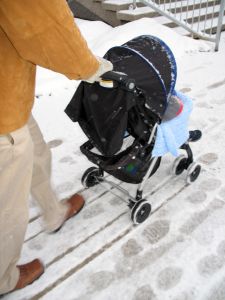
A recent accident, on Sumner Avenue near Lester Street, took the life of a mother and seriously injured her nearly 2-year-old daughter. The mother and her stroller were hit by a passing motorist. The child was ejected from the baby stroller and flew onto the side of the road.

The child was last reported to still be in the pediatric intensive care unit at Baystate Medical Center. She is suffering from an abrasion to her liver, a collapsed lung and a few broken ribs. She needed nearly 30 staples to close up a cut in her head, too.

To make matters even worse, the driver who hit the mother and the daughter didn’t even stay at the scene to offer help, instead he drove off after the collision. Luckily, officers have the driver. He turned himself in to the headquarters. He is awaiting his arraignment and is facing charges of driving a motor vehicle with a revoked license, using a motor vehicle without authority, leaving the scene of a personal injury crash that resulted in a fatality, leaving the scene of a personal injury accident, negligent operation of a motor vehicle and motor vehicle homicide.
266401_taking_a_stroll.jpg
“It was an accident, but it stopped being an accident as soon as he left,” said the mother and grandmother of the victim’s.

Our Boston pedestrian accident lawyers understand how dangerous our roadways can be, especially if you’re traveling on foot. Every year, there are hundreds of pedestrians who die in vehicle-related accidents. Both drivers and pedestrians need to be aware of their surroundings at all times to help to reduce the risks of these accidents. This is especially important when one of these pedestrians is a parent, traveling with a young child.

The mother and the daughter were heading home from the mall at roughly 8:00 p.m. when the accident happened. The bus stop where the two got off is right in the middle of the two closest crosswalks. Heading to these crosswalks means tacking on another half mile to their journey. Residents say that the absence of crosswalks and the heavy, speeding traffic produces a deadly combo.

Pedestrians are asked to keep a lookout for dangerous drivers at all times. This is especially important when you’re walking with a young child. When you’re walking with a stroller, you want to make sure that you have ample time to get across the roadway. Rushing with a stroller is not only dangerous in terms of a vehicle-related accident, but it also poses injury risks to your child.

You want to avoid walking at night, especially with small children. If you have to walk when it’s starting to get dark out, make sure that your wear bright-colored clothing and reflective materials to help passing motorists to see you more easily.
Continue reading

Police officers are beefing up their patrols and they’re focusing on bringing down the accident numbers on both Route 195 and Route 24. According NECN, officers’ new initiative will add more than 10 patrols on Friday and Saturday nights from 8:00 p.m. to 4:00 a.m.

This initiative will last through the summer and will cost nearly $150,000.
457100_light.jpg
“I think the dollars that going to expend down here are well spent and hopefully saving lives and getting out this message about operator safety,” said Colonel Timothy Alben with the Massachusetts State Police (MSP).

Our Boston car accident lawyers understand that there were nearly 20 serious accidents that happened in these areas from just the 1st of January through the 17th of July. Eleven of these accidents were fatal, five resulted in serious injury and more than 30 percent of them involved a driver who was under the influence. On the 15th of July, there was a double-fatality accident on Route 24 that was caused by a wrong-way driver. Just two days later, there were two more wrong-way drivers who caused accidents on Route 195. There have even been some truck rollovers. Officers think that many of these accidents could have been prevented, but drivers are saying that it’s not their fault and it’s the road’s fault!

Alben says that drivers aren’t taking safety seriously. He says that driver’s habits are what’s getting them into trouble on our roadways. It’s speeding, it’s distractions, it’s alcohol and it’s drugs. Drivers are saying that it’s the narrowness of the road that’s causing these accidents.

Truth is, dangerous and defective roads are often partially to blame for an accident. Transportation officials have an obligation to make sure that our roads are safe and that all hazards are eliminated. Hazards can include narrow lanes, obstructed traffic devices, missing traffic devices, defects in the pavement and more. Having a good attorney can permit a thorough review of the factors involved in your accident.

About 100,000 vehicles use the upper part of Route 24 every day. Massachusetts officials have set aside about $12 million to help improve the road through a resurfacing project.

With the new roads, drivers may be more likely to speed, says Alben. He and the MSP are asking drivers to keep an eye on their speedometer when traveling along these roadways.

Aside from speeding and driving under the influence, officers say that they’re very concerned with drivers who are using cell phones and text messaging devices behind the wheel. In the state of Massachusetts, drivers are allowed to talk on their cell phone while driving, unless they’re under the age of 18. Drivers are prohibited however, from text messaging while driving, according to the Insurance Institute for Highway Safety (IIHS). Officers are asking drivers to keep all electronic devices out of the driver’s seat.
Continue reading

According to a recently-released study published in the Journal of Safety Research, young drivers aren’t likely to recognize the risks and the dangers that are associated with driving while they’re sleep deprived.

Officials with the National Safety Council (NSC) conducted the study and concluded that driving without enough sleep is just as dangerous as driving under the influence of alcohol. Unfortunately, attitudes towards each of these behaviors are vastly different, especially among young drivers.
1243928_man_in_bed.jpg
Officials believe that there are thousands killed in drowsy driving car accidents in Quincy and elsewhere every year. The true number may never be known because drivers are not likely to admit to an officer that they were feeling sleepy when the accident happened. As a matter of fact, officials estimate that about 100,000 accidents are caused every year by fatigued drivers. The most recent statistics from DrowsyDriving.org conclude that nearly 60 percent of those who are involved in these kinds of accidents are under the age of 25.

According to the recent study from the NSC:

-Young drivers are some of the most likely to be involved in a sleep-deprived car accident.

-Among drivers who take long road trips, drivers under the age of 30-years-old are most likely to drive without enough sleep than any other age group.

-Some of the driving errors that are made by a driver who is sleep-deprived are awfully similar to the driving errors that are made by a driver who has been drinking.

“Drunk driving is universally viewed as dangerous, but young people especially don’t understand the very serious risks associated with drowsy and distracted driving,” said Janet Froetscher, National Safety Council’s presidents and CEO.

The truth of the matter is that all drivers need to be aware of the risks that are associated with driving while drowsy.

The recent study looked at how drivers of different ages saw drowsy driving and compared those perspectives to their perspectives on drunk driving. Researchers had no difficulty in figuring that young drivers saw sleepy driving as acceptable and understandable, while they saw drinking and driving as a definite no!

Tips to Avoid Drowsy Driving:

-Make sure you’re getting at least 8 hours of sleep every night.

-Drive with a friend and switch spots when you start to feel tired.

-Schedule regular rest stops to get out and stretch. You should stop every 100 miles or at least once every 2 hours.

-Never drink alcohol or take any sleep-inducing medications before drinking.

What a driver should never do is try to power through the sleepiness. That is one of the worst mistakes you can make. Caffeine will only work for so long, as will loud music and open windows too. If you feel drowsy behind the wheel it’s critical for you to stop driving. You should either switch spots with a passenger or just pull over in a safe area and get some rest!
Continue reading

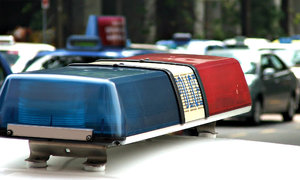
An 11-year-old vehicle occupant was injured in a recent car accident in Randolph. This was no ordinary accident. This accident involved a cruiser from the Massachusetts State Police, according to Fox 25.
mPIXIhI.jpg
The cruiser was heading south on Route 24 near Exit 20 just before 4:00 p.m. when the officer saw a broken down vehicle on the side of the road. The officer attempted to cross over to the other side of the highway, with its emergency lights activated, when it slammed into another vehicle.

The officer was not injured in the accident, but the 11-year-old passenger of the other car was seriously injured when its airbags deployed. Both the driver and the young passenger were taken to the Good Samaritan Hospital in Brockton.

In the week prior, there were three people killed and several others injured in four different accidents along Route 24.

When you’re involved in a crash with a police cruiser or with any other kinds of government vehicle it’s important to remember that there are very special rules that you must follow. In these incidents, there’s a strict 6 month statute of limitation in which you have to file a claim against a government entity. In these situations, it’s critical for you to contact an experienced attorney to help to make sure that your rights are protected and to help you to fight for the compensation that you deserve.

In these circumstances, your claim has to be brought against the government. You don’t go against the driver of the vehicle, but their employer. If you’re hit by a vehicle that was responding to an accident or another type of emergency and are unsure of that vehicle’s right-of-way then you should also contact an attorney immediately. There’s an entire list of rules you’ve got to follow in these scenarios, too.

When you’re involved in a car accident with a law enforcement vehicle, it will usually be the involved officer’s department that will be in charge of investigating the accident. Unfortunately, there’s a common trend of no-fault verdicts in these cases. You want to make sure that you’ve got an outside party investigating the accident as well to help to make sure that you’ve got an unbiased perspective.

Have you been involved in an accident with military personnel? Well, that’s a whole different set of rules. Even when the driver of a military vehicle is at fault in an accident, you cannot sue the driver. A federal administrative claim must be brought against the federal government.

Regardless of who you’ve been in an accident with, the first thing on your list after receiving medical attention should be to contact an experienced attorney who can help you to make sure that your rights are protected and that can help you to collect the compensation that you deserve.
Continue reading

A recent trucking accident in Woburn ended up shutting down Interstate 95. According to state authorities, the truck was carrying nearly 10,000 gallons of gasoline when it crashed at about 10:00 p.m. Lanes were closed in both directions as emergency response crews reported that the truck was leaking fuel all over the roadway, according to WWLP.
mlx6YeK.jpg
Preliminary reports of the trucking accident conclude that the truck collided with a passenger car on the Interstate. Officials with the Woburn police and fire department worked to contain the leakage. Nearby homes were even evacuated with the risks associated with the hazardous material
Our Woburn trucking accident attorneys understand the dangers that accompany accidents with tractor-trailers, big rigs, 18-wheeleers, semis and other large vehicles. These kinds of accidents get a whole lot worse when these vehicles are carrying dangerous materials on them. Under federal law, trucking companies are restricted regarding which materials they’re allowed to carry. When they’re carrying an approved material, then they’re required to make sure that it’s being transported in the appropriate trailer and that it is marked accordingly. They’re also limited to where they’re allowed to travel. Only specific roadways are designed to handle the weight and the demands of these large trucks. When trucking companies do not adhere to these rules and regulations, both the truck drivers and the companies can face some serious criminal charges, in addition to civil liability.

These kinds of accidents can be caused by a number of conditions:

-Injury or fatality resulting from unsafely-loaded cargo or hazardous materials.

-Fatigued truck drivers.

-Distracted truck drivers.

-Truck drivers under the influence of drugs or alcohol.

-Drivers who fail to obey road and trucking laws.

-Truck driver sickness.

-Drivers not being provided with sufficient training or supervision.

-Truck maintenance problems.

In 2010, there were nearly 7,700 people who were killed in traffic accidents that involved a large truck, according to the National Highway Traffic Safety Administration (NHTSA). These large trucks are considered to be vehicles that have a gross vehicle rating of 10,000 pounds or more. In the country, there were nearly 300,000 of these trucks involved in accidents during the year. As a matter of fact, these kinds of accidents showed a near 10 percent increase from the previous year.

The drivers of passenger vehicles are urged to be safe, cautious and alert when driving near these large vehicles. This is especially true during the summer travel season when our roadways are more congested. The increase in traffic increases the risks for accidents, too. The safest of driving habits can help to keep you out of a potentially fatal accident. Your best bet is to just stay away. Avoid traveling near these large trucks for any more time than you have to.
Continue reading

We have a lot of pedestrians throughout the state of Massachusetts. Many residents choose to walk to both work and school as well as to public transportation spots to get to where they’ve got to go.

There are also a number of NeighborWalk community walking groups. Recently, Mayor Thomas M. Menino teamed up with these NeighborWalk community groups at the local Franklin Park Zoo to show his support for the success of this program. This initiative provides people who live in the area with an opportunity to get out there and to get active, according to the City of Boston.
mPiA57Y.jpg
Unfortunately, we’ve got some high accident rates involving pedestrians in the area, too. Not only are these kinds of events held to help to get residents healthier, but they’re also used to raise awareness about our pedestrian travelers throughout the state. All too often, walkers are overlooked by motorists. Residents, visitors and other travelers need to be more cautious of one another as we work to help keep our city safe for everyone.

Our Boston pedestrian accident lawyers understand that this is the 10th year that the NeighborWalk program has been going on. It’s all a part of Boston Moves for Health. To help to celebrate this milestone in the program, the senior vice president and the executive director of the Boston Red Sox Foundation made an announcement that he would be donating $10,000 to the program to not only show his support for it and for healthy residents, but to also help to fund some of its events through the fall season.

“These walking groups really embody the spirit of Boston Moves for Health,” Mayor Menino said.

Menino adds that he would like to continue to urge everyone in the area to grab their friends and their family members to get active and to get moving. Our city offers some great parks for getting out there and getting active. Menino says that this program helps to get Boston to be a healthier city.

NeighborWalk helps to provide funds for not-for-profit, community-based organizations that work to encourage residents to get out there and get walking. Many of these organizations help to provide accessible routes for pedestrians and lead walks every week during the summer season.

This year, there were nearly 30 walk groups within the Boston area that were able to round up nearly 400 participants. Boston Moves for Health has been able to log more than 7,000 miles just this spring.

Walking is good for you because it helps to prevent:

-High cholesterol.

-Poor muscle and joint health.

-Depression.

-High blood pressure.

-Cancer.

-Colon cancer.

-Depression.

-Breast Cancer.

-Coronary heart disease.

-Type 2 diabetes.
Continue reading

Car accidents continue to be the number one cause of death for residents between the ages of 5- and 34-years-old. In fact, these crashes are among the top causes of death for residents of every age. Each year, there are more than 30,000 people killed in traffic collisions nationwide.

Not only do we lose lives in these accidents, but the cost of them puts quite the damper on our economy. In 2005, car accidents cost the country more than $41 billion in both work lost costs and medical costs, according to the latest reports.
2dRWtoR.jpg
Our Boston accident attorneys would like to remind motorists that many of these accidents are completely preventable. We don’t necessarily have to shell out near;y $400 million for these accidents in the Commonwealth each year.

That’s right. The state of Massachusetts racks up a bill of nearly $400 million as a result of traffic accidents every year. A substantial portion of these costs are racked up by young adults involved in car accidents. They cost nearly $200 million.

The next costliest group is older adults, racking up nearly 30 percent of these costs, or more than $110 million.

Teens are the second runner-up with more than $65 million in related costs. As a matter of fact, the state of Massachusetts had the highest bill in the entire New England region for car accident costs.

What’s most important to remember is that many of these accidents can sometimes be avoided. Safe driving advocates and federal officials suggest effective policies and programs to do just that, according to the Centers for Disease Control and Prevention (CDC).

Recommendations to help save lives:

-Primary enforcement seat belt laws. Officials suggest that these laws cover all passengers. Currently exempt under the state’s seat belt laws are postal workers on the clock, drivers of emergency response vehicles, fire truck drivers, police officers, truck, bus and tractor drivers (with a gross weight of at least 18,000 pounds), taxi drivers, drivers of vehicles made before 1966 as well as drivers and passengers who have proof from a physician that a disability or medical condition makes wearing a seat belt dangerous or impossible.

-Comprehensive graduated drivers licensing (GDL) program. These programs are designed to help newly-licensed drivers to gain experience under lower-risk conditions. In our state, these young drivers have very loose restrictions regarding allowable passengers. For the first 6 months of their intermediate license they’re prohibited from having any passengers present under the age of 18. Unfortunately, this law is secondary enforcement 12:30 am to 1:00 a.m. as well as from 4:00 a.m. to 5:00 a.m.

During this time of the year, when are roadways are more congested, drivers are asked to be on their best behavior behind the wheel. Safe driving habits can help to keep you and your passengers alive!
Continue reading

Contact Information