Group Picture of the Law Offices of Jeffrey S. Glassman
Justia Lawyer Rating

Drivers in Massachusetts recently got a firsthand look at just how dangerous it is to text and drive. Teenagers in Stoughton were the latest group of drivers to take part in the Arbella Insurance Foundation Distractology 101 tour, according to the Stoughton Patch.
mj1Vw5e.jpg
This program is an effective and interactive way to show teen drivers just how dangerous this act can be. The program has a 36-foot-long, neon classroom that can travel from city to city. It comes equipped with a distracted driving simulator.

Our Stoughton car accident lawyers understand that there were close to 5,500 people killed and close to 500,000 injured in distracted driving car accidents in 2009. To no surprise, studies have indicated that driving while distracted increases your risks for an accident by close to 25 times. What’s alarming is that the problem doesn’t seem to be getting any better. In June of last year, there were more than 195 billion text messages send and/or received in the country. That’s up about 50 percent from June of 2009.

The Arbella Insurance Foundation Distractology 101 tour is focusing its efforts on teen driver because they are the ones who are most likely to engage in this kind of dangerous driving behavior. In 2009, about 40 percent of surveyed teenagers said that they had been in a vehicle with a driver who was using a phone in such a way that others were in danger.

According to the AAA Foundation for Traffic Safety, teen females are twice as likely as their male counterparts to engage in this distraction.

Some experts are saying that you can’t blame it on the technology though. In a recent study, more than 105 drivers were monitored for a 40-minute time period. Of these drivers there were two groups formed; frequent cell phone-using drivers and those who barely use a cell phone at the wheel at all.

There were no cell phones involved in this study.

What researchers found is that drivers who admitted to using their cell phone behind the wheel more often were more likely to engage in dangerous driving habits, even when the cell phone wasn’t present. They were more likely to speed, to change lanes dangerously and to slam on both the gas and the brake, according to ScienceNow.

“The fundamental problem may be the behavior of the individuals willing to pick up the technology,” said the leader of the study, Bryan Reimer with the Massachusetts Institute of Technology (MIT) in Cambridge.

The findings of this study helped some safe driving experts to determine why distracted driving laws haven’t produced some of the results that they had hoped. With or without a phone, drivers are still behaving dangerously behind the wheel.
Continue reading

Road rage is a little more common than you might have thought.

According to U.S. News, one survey of 500 people concluded that about 90 percent of motorists say that they’ve personally witnessed an act of road rage or they’ve been the victim of it at least once in the last year.

In the ’90s, this dangerous behavior led to the deaths of nearly 220 people and injuries to another 12,000.
1119013_no_heaven.jpg
Unfortunately, many of these injuries and fatalities are caused by firearms or by the driver’s vehicle used as a weapon. The reasoning for this behavior is unbelievable too, spanning from arguments over parking spots, to annoyance over drivers going too slow or retaliation against those who honk their horn. It seems like drivers are a little too quick to freak out behind the wheel and to put lives in danger because of it.

Our Braintree car accident lawyers understand that road rage is a serious public safety issue and it seems to be getting more common in both its frequency and level of violence. According to the Essex District Attorney’s Office, there are police officers on our roads who are working around the clock to keep the peace, but the most important and effective players in this game are us drivers.

Road rage is one is an extensive displays of anger behind the wheel, which can result in physical assault or other criminal activity. There are other acts that are less severe, which may be better characterized as aggressive driving. These acts include tailgating, erratic lane changes, excessive horn-honking, displaying obscene gestures, yelling, speeding, etc.

“It’s triggered by mental assumptions we’re making about other drivers–like assuming someone is doing something on purpose to bother you, because they’re inconsiderate,” said Leon James, a teacher of traffic psychology at the University of Hawaii.

To help you to keep your cool behind the wheel, officials with the Essex District Attorney’s Office are here to offer you some safe driving tips.

Tips to Avoid Road Rage:

-Avoid this behavior at all costs. If you see an enraged driver on our roadways, steer clear of him. You never want to instigate an argument with one of these drivers or put yourself in harm’s way.

-De-escalate all situations. Don’t do anything to further upset another driver. Try to keep distance. If you have to, find a safe and populated area to pull over and wait it out.

-If you’ve got a cell phone and you need help or would like to report an enraged driver, pull over to do so. Never take matters into your own hands. Leave them to a law enforcement official.

-Remember that state police are trained to handle these kinds of situations. You are not.

-Don’t tailgate other vehicles or drive in a hasty manner that might provoke road rage.

-Leave for your destination with plenty of time to spare. This will help you to avoid rushing and frustration.

-Make sure you get plenty of rest before you travel. Tiredness can help to provoke aggressive driving habits and road rage.

-Calm down before you make an irrational decision. If you start to get angry behind the wheel, pull over to somewhere safe and take a moment.
Continue reading

A teen has died and three others have been injured in a recent car accident in southeastern Massachusetts. According to NECN, the accident happened at about 9:00 p.m. when the teen lost control of his vehicle slammed into a telephone pole in Kingston and flipped several times.

Paramedics and emergency response teams showed up to the scene of the accident to find two of the occupants seriously injured. They were both flown to Boston. The other two in the vehicle were transported to South Shore Hospital. Officers haven’t determined if drugs or alcohol played a role in this accident, but they do feel that speed was a cause.
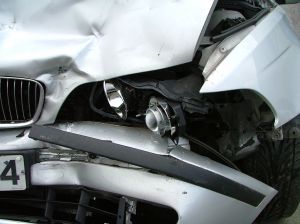
748020_crash_car_1.jpg
“They observed a telephone poll that had been sheered, they also observed a tree that had been hit approximately 12 feet off the ground and there was a vehicle alongside the tree,” said Chief Joseph Rebello.

Our Kingston car accident attorneys understand the risks that teens face behind the wheel. They’re not equipped with much experience behind the wheel and therefor are in serious danger for a potentially fatal accident.

In 2004, there were nearly 300 car accidents involving 15-year-old drivers, more than 4,000 involving 16-year-old drivers, nearly 9,500 involving 17-year-old drivers and another 8,750 involving 18-year-old drivers. And that’s only in the state of Massachusetts, according to the Massachusetts Department of Transportation (MassDOT).

One of the main reasons that these drivers are getting into so many car accidents is because they do not abide by the state’s passenger restrictions. In the state of Massachusetts, drivers who have a restricted driver’s license are not allowed to have any passengers younger than 18 in their vehicle for the first six months. From 12:30 a.m. to 1:00 a.m. and from 4:00 a.m. to 5:00 a.m. these laws are only secondarily enforced. This means that an officer has to witness them breaking another road law before they can be pulled over and cited for having too many young passengers in the vehicle with them, according to the Insurance Institute for Highway Safety (IIHS). These passenger restrictions are lifted once a driver hits the age of 17-years-old.

In the state of Massachusetts, there were more than 20 teenage drivers who were killed in car accidents in 2010. There were more than 10 passengers in these young drivers’ vehicles who were killed in these same accidents.

National Teen Driver Statistics:

-About 40 percent of teen fatalities are the result of a traffic accident.

-In 2010, there were close to 2,000 drivers who were killed in these accidents.

-There were nearly 200,000 teenage drivers injured in traffic accidents in 2010.

-Teenage drivers have a higher risk for a car accident than drivers in any other age group. Per mile driven, they’re actually four times more likely to get into an accident than an older driver.

-Teenage drivers account for about 10 percent of the country’s population, but accounted for about 15 percent of the motor vehicle accident fatalities.
Continue reading

We all wish that our kids would stay young forever. But the truth of the matter is that they’re getting older and they’re getting their driver’s licenses. While we can’t ride with them everywhere they go, there is a way for us to keep an eye on them. Some say it’s not a well-thought out idea though. It’s the “PUSH TEXT” app and it’s helping you to get a report card on your teen’s driving habits.
mi2YLCk.jpg
According to the Courier-Journal, this new app was created by a Cooper City, Florida father. When you download and signup for this app, you get two bumper stickers and access to the app. You put one of the stickers on your teen’s car. It reads, “How is my KID driving? Push Text my tag #.” When drivers who have the app see your teen’s car, they can send an anonymous text message to the account.

Other drivers will help to keep an eye on your teen driver. That’s where the worries come in. Some say that they worry that drivers will submit falsified reports. Others are worried that the app will urge drivers to whip out their phone and start texting while driving, increasing the risks for an accident.

Our Boston car accident lawyers understand that teens are heading back to school and they’re spending just as much time behind the wheel as they are in the classroom. Teen drivers are at serious risks for car accidents during this time, too. Unfortunately, car accidents continue to be the number one cause of death for these young drivers. Parents are urged to sit down with their teen and talk with them about the dangers of driving. Talk with them about the importance of safe and responsible driving habits behind the wheel. Your influence is bigger than you might ever imagine. You are one of the most influential people in these young driver’s habits.

The “PUSH TEXT” app was released late last month.

“This puts a little bit of yourself in the passenger seat as a parent,” said the app’s designer.

According to the Massachusetts Department of Transportation (MassDOT), teen drivers are four times more likely to die in a car accident and nearly 15 times more likely to be injured than any other age group of drivers. By a 2-to-1 margin, teenagers are more likely to kill someone in the car with them than themselves.

Driver inexperience and speed are the two top causes of car accidents for this young age group. Following these top causes are emotional distractions, alcohol and neglect to wear a seat belt.

Two out of every five fatalities among teens is the result of a car accident, according to the Centers for Disease Control and Prevention (CDC). Every year, thousands are killed in these incidents.

In the state of Massachusetts, car accidents rack up quite the bill, especially among teenagers. In 2005, car accidents cost nearly $395 million in the state. Of these costs, teens were responsible for more than $65 million. Medical costs accounted for nearly $10 million.
Continue reading

Are you getting the car insurance coverage you need for the price you can afford? Coverage comes in all shapes and sizes and we’re all paying a little different. Men pay more than women. It’s a fact that’s stood true for years. Men are involved in more accidents and those accidents are also more severe, according to Yahoo. They’re also busted for more drunk driving incidents and they get more traffic violations than women.
mfXibUs.jpg
“Men traditionally have been paying more for decades,” said Loretta Worters, vice president for the Insurance Information Institute (III).

Our Massachusetts car accident attorneys are here to help you to get more familiar with the coverages available and with the discounts that are available to you. That’s right. There are simple ways that you can lower the costs of your insurance policy. One of the easiest things that you can do is simply get older. The older you are the safer insurance companies think you will drive. One of the largest stages of insurance cost drops occur when a driver hits the age of 25. By this time, insurance companies feel that you possess enough experience behind the wheel and that you’ve matured enough to practice safe habits behind the wheel. But there are more discounts that can help to lower your insurance rates. Check ’em out!

Popular Car Insurance Discounts:

-Low Mileage: If you don’t drive that often then you’re not at a high risk for car accidents., insurance companies would like to reward these drivers.

-Pay-in-Full: When you pay for your insurance policy six months or a year in advance, insurance companies will reward you for it. They get their money and you get a discount. Everyone wins. This way, insurance companies don’t have to worry about being shortchanged and you don’t have to worry about late fees.

-In-Car Security: Nowadays, vehicles come equipped with more airbags, with anti-theft devices, with anti-lock brakes and more. These devices help to keep you out of an accident and they help to protect you should you get into one. Both of these advantages equate to less insurance payouts, which makes companies happy.

-Passive Restraint. Don’t you just love those seat belts that automatically buckle you in? Well, your insurer does, too.

-Bundled Insurance: Companies want to keep your business, and your money, too. When you insure more than your car with a company, they oftentimes will offer you a discount!

-Good Student: A car insurance company sees good grades and a good driver. Getting a good report card can help to bring down your kid’s insurance costs.

-Accident Free: Have you been good behind the wheel? Insurance companies don’t see you as a big threat and will reward you for your safe driving habits.

-Daytime Running Lights: Vehicles equipped with Daytime Running Lights as standard equipment could earn you a discount on certain car insurance coverages.

-Defensive Driving: For those who have completed a defensive driving course, you may be able to save on your premium.

-Military: Many insurance companies will give back to those who have served our country. If you are on active duty, retired from the Military, or a member of the National Guard or Reserves, you may be eligible for a discount, too.
Continue reading

With the Labor Day holiday weekend, there will be millions of Americans getting out to celebrate that last summer break. Experts predict that close to 35 million people will be traveling more than 50 miles away from home for the celebration. It’s one of the busiest travel holidays of the year. According to INRIX Traffic, the city of Boston will hold the spot for the fifth worst city in the nation for weekend road-trippers. On any other day, it’s ranked as the ninth most congested city for traffic in the nation.
mfebjLa.jpg
According to the Boston Globe, travelers going to either the Connecticut casinos or to Portland, Maine should expect their trips to take twice as long as normal.

Our Boston car accident lawyers understand that the Labor Day weekend is the ideal holiday to take that last summer vacation. The holiday weekend provides us with an extra day off of work and some beautiful weather to enjoy along with it. Drivers are warned about the weekend traffic. Friday traffic is especially dangerous, starting with the long rush hour at about 7:30 a.m. but is expected to last well into the evening. If you’re going on vacation, we urge you to leave on Saturday. If you’ve got to be out by Friday, you better expect a long day of travel. Your best bet is to leave after 9:00 p.m. on Friday if need be to avoid the heavy road condition. It’s expected to peak at about 11:00 a.m.

”As a gateway city as well as a popular destination, Boston will experience some of the worst traffic on the Friday getaway day,” Jim Bak, INRIX director of community relations.

Heavy delays are expected on both Interstate 95 and Interstate 90, so you’re urged to avoid them altogether if possible.

According to the National Safety Council (NSC), there will be nearly 410 people who will die in car accidents over the Labor Day holiday weekend. For record-keeping purposes, the holiday weekend is defined as the time from 6:00 p.m. on Friday through 11:59 p.m. on Monday. In addition to these fatalities, officials are predicting that there will be close to 41,000 people who are injured in car accidents during this time.

We’re urging you to be on your best driving behavior over this holiday weekend. There are a few simple things that you can do to help to reduce your risks of an accident though. Please review these tips (listed below) and share them with your friends and family members to help ensure a safe weekend for everyone.

Labor Day Travel Safety Tips:

-Be sure to inspect your vehicle before leaving.

-Always wear your seat belt. Make sure everyone is buckled up.

-Never get behind the wheel under the influence of drugs or alcohol.

-Expect traffic delays.

-Leave your house early to allow plenty of time to get to where you’re going.

-Be courteous on our roadways. We’re all traveling together.

-Keep distractions out of the driver’s seat.
Continue reading

According to state police officers, a Massachusetts teen was reaching into his bag of fast food on her lap when she slammed her vehicle into an officer’s cruiser. The 18-year-old driver from Westfield allegedly blew through a red light just before 1:00 a.m. when she slammed into Trooper Daniel Moran, who had a flashing yellow light, according to FOX Carolina.
mfqEWG0.jpg
According to a Massachusetts State Police (MSP) spokesman, there’s evidence that the young driver was eating from her bag of McDonalds when the accident occurred. The young driver says she doesn’t recall the details. She has been cited for not wearing a seat belt, for neglecting to yield to a traffic signal and for impeding operation of a motor vehicle with food in her lap.

Our Westfield car accident lawyers understand that when the topic of distracted driving comes up that you usually hear about cell phones and text messaging devices. Well, there’s a whole slew of distractions that can cause you to get into an accident, and eating behind the wheel is one of them. Aside from using a cell phone, distractions can result from eating, from putting on makeup, from playing with the radio and from talking with passengers.

Top Driver Distractions, According to AOL Autos:

-Applying makeup. We’re all on a tight schedule nowadays, but the driver’s seat shouldn’t be used as your bathroom. Not only are you diverting your attention from the road, you’re also at risk of looking like a sad clown by the time you get to the office.

-Shaving. Believe it not, men are shaving their faces in the rear-view mirror. Just because your razor is cordless does not mean that it should be brought everywhere.

-Eating. You’ve got a cheeseburger in one hand, your soda in the other and your fries between your legs. It’s an equation that oftentimes equals a car accident.

-Reading. A good book will still be just as good when you start to read it after you get out of your car. It’s not going anywhere. Pay attention to the road!

-Cell phones. “Research shows that driving while using a cell phone can pose a serious cognitive distraction and degrade driver performance,” say officials with the NHTSA.

-Texting. This is something that takes all of your attention off of the road. Your eyes of the road, your hands off of the wheel and your mind off of the task at hand — driving. Texting is not safe at any speed but zero.

-Lounging. One of the first things you learn in driver’s education is how to properly sit in a driver’s seat. Still, far too many drivers slouch in their seat, lean on the door, throw their foot up on the seat and hang their foot out of the window. All of this slows your reaction time and compromises your safety.

-Singing. Yes, we might all think we’re Toni Braxton behind the wheel, but regardless of how well we belt out to our favorite tunes, the truth of the matter is that we’re all increasing our risks for an accident.
Continue reading

A 68-year-old man was recently injured in railroad accident in Medford. It happened after authorities say the man decided to drive his car around a railroad crossing gate. His car was hit by an oncoming Amtrak train.

According to the Boston Globe, the accident happened just after 8:00 a.m. at the West Medford station at High Street. The collision involved the Downeaster that was heading from Portland to Boston. There were more than 60 passengers on the train at the time of the accident. None of them were injured. The accident delayed travel on the Lowell commuter rail. Some trains were canceled.
nAvtb9q.jpg
The driver was transported to the hospital and treated for injuries. His car sustained some serious damage in the wreck. Police officers say that he will be ticketed for driving around the railroad crossing gate.

Our Boston car accident attorneys understand that the Department of Transportation’s Inspector General estimates that more than 90 percent of all grade crossing accidents are caused by risky driver behavior. The average train is about 7,000 feet long and weighs more than 3,000 tons. Now, when you throw that up against the size and the weight of your everyday passenger vehicle, it’s easy to see that we don’t stand a chance as motorists.

In 2011, there were more than 11,000 railroad accidents, according to the Federal Railroad Administration Office of Safety Analysis. In these accidents, there were nearly 700 people who were killed and more than 8,000 people injured in these accidents.

Of these accidents, nearly 2,000 of them occurred between vehicular traffic and trains. Nearly 250 people died in these accidents and another 1,000 were injured. Highway-rail incidents represent more than 17 percent of all reported train accidents.

Common causes of train accidents:

-Defective tracks
-Train operator negligence
-Defective train crossing equipment
-Brake malfunctions
-Human factors, like trespassing, drowsy train operators and other dangerous driving behaviors contributed to more than a third of all highway-rail accidents.

-Track defects contributed to more than 34 percent of all train accidents.

General precautions for drivers at railroad crossings:

-Always approach a crossing like there’s a train coming. Always be ready to stop.

-Don’t rely on sound from the train to alert you that it’s approaching. Always be aware of your surroundings.

-Never to cross the tracks unless you’re absolutely positive that you can make it all the way across.

-Never shift gears while crossing railroad tracks.

-Remember that there could be more than one train crossing the intersection at the same tie. Be sure the coast is clear, in all directions, before proceeding.

-Be careful of obstructions that may block the view of an approaching train, including vegetation, buildings, standing railcars, other vehicles, etc.

-Be extra careful and slow your speed near tracks in inclement weather.

-When possible, plan your trip to use crossings that are equipped with gates and flashing light warning devices or flashing lights.

Remember that it takes a train much longer to stop than a passenger vehicle. As a matter of fact, it takes a train about a mile to come to a complete stop. That’s close to 20 football fields.
Continue reading

Teen drivers in the state of Massachusetts have to follow strict laws before they’re able to get their unrestricted driver’s license.

They’re required to complete the state’s graduated driver’s licensing (GDL) program, which puts restrictions on them regarding when they can drive and who they can drive with, according to the Insurance Institute for Highway Safety (IIHS).

Some of these laws are secondary enforcement, meaning that an officer can only pull over one of these young drivers if they’re witnessed breaking another road law first.
mgyqE08.jpg

And often, making a traffic stop requires an officer to make a judgement call about a young driver’s age. 17? Or 18?Lawmakers in the state of New Jersey have found a simple way around this enforcement puzzle and both teens and parents aren’t too happy about it.

According to The Washington Post, teens are required to put a red sticker on their license plate to alert law enforcement officials that they are an underaged driver. This is all a part of “Kyleigh’s Law” and officials say that it’s helping officers to keep a closer eye on these vulnerable travelers. Parents are saying that it’s just making them a moving target for predators.

Our Quincy car accident lawyers understand that the first few years of a teen’s driving career are some of the most crucial. During this time, teens develop some of the habits they’re going to hang on to for a lifetime. This is also a time when they’re most likely to get into a car accident. It’s important that we keep an eye on these vulnerable drivers, but there may be no need to point them out on our streets, many parents believe.

It’s important to talk with your teen driver on a regular basis and discuss the importance of safe and responsible driving. Believe it or not, parents are some of the most influential people in a teen’s driving life. Make sure they’re aware of the state’s GDL laws and that they understand the repercussions of not following these laws.

The controversial law from New Jersey, known as “Kyleigh’s Law,” was recently upheld by the state’s Supreme Court. Under this law, drivers will have to place a red sticker on their license plate for one year when they get their permit and for the year after.

“I think it’s good because, like, it can help new drivers and police locate them. But I think it can also cause predators to locate 17-year-old kids,” said a Jersey resident.

Officers and lawmakers say that these stickers are to help enforce safety. They want to keep an eye on when these teens are driving and who is in the car with them. Luckily, the decals only adhere with Velcro and can easily be removed, which is why many teens and parents have chosen not to participate, although participation is mandatory.

You won’t get a moving violation, but you can face a $100 fine for not having the decal on your license plate, in the state of New Jersey that is.
Continue reading

The CEO of the popular cell phone service provider AT&T, Randall Stephenson, is currently pushing drivers to put down their phones and to help reduce risks of distracted driving car accidents in Boston and elsewhere.

During the Olympics, we saw the commercial of a man in a wheel chair who was suffering from a severe brain injury and was holding a sign with the text “Where r.” Those two words were the reason for his life-altering injuries. He was texting behind the wheel when he was involved in a serious car accident.

This commercial is all a part of the company’s “It Can Wait” campaign, which urges drivers to stop texting while driving.
mhGtgZC.jpg
“This is the text message that caused the car accident that changed my life forever,” said the guy in the commercial.

Our Boston car accident attorneys understand that these kinds of campaigns specifically target our younger drivers as they’re more likely to be involved in distracted driving car accidents. The “It Can Wait” campaign has been going strong since 2009, but advocates are taking the next step. They’re urging all drivers to join them during “No Text on Board — Pledge Day” and make the pledge on September 19th to stop texting behind the wheel, according to CNN.

You don’t have to wait until the 19th of September. You can visit the website and take the pledge today!

Texting while driving has increased by about 50 percent in one year. In 2010, about 20 percent of drivers admitted to texting or emailing while driving, according to the Pew Internet & American Life Project. With these confessions, it’s easy to understand why about one out of every five fatal car accidents involves a distracted driver. Teen drivers are doing it a lot more though, as nearly 45 percent admit to doing so.

If you text message behind the wheel, whether you’re reading one or sending one, you’re nearly 25 times more likely to get into a serious car accident.

According to Stephenson, some of his competitors, including Verizon and Sprint, already have anti-texting campaigns, too. He says that he welcomes all of the advocacy he can get!

“This is a dead-serious issue and I don’t mean that as a pun,” said Stephenson.

Cell phone providers aren’t the only ones getting in on the action. Officials with the U.S. Department of Transportation, the wireless-industry trade association CTIA, the National Organizations for Youth Safety and the National Safety Council are in on the fight, too!

According to the Insurance Institute for Highway Safety (IIHS), only drivers over the age of 18-years-old are allowed to use a hand-held cell phone behind the wheel in the state of Massachusetts. All drivers are prohibited from text messaging while driving. Although it’s written into law, not all drivers are listening and distracted driving car accidents continue to plague our roadways. Make the pledge today and help to keep yourself and everyone else safe!
Continue reading

Contact Information